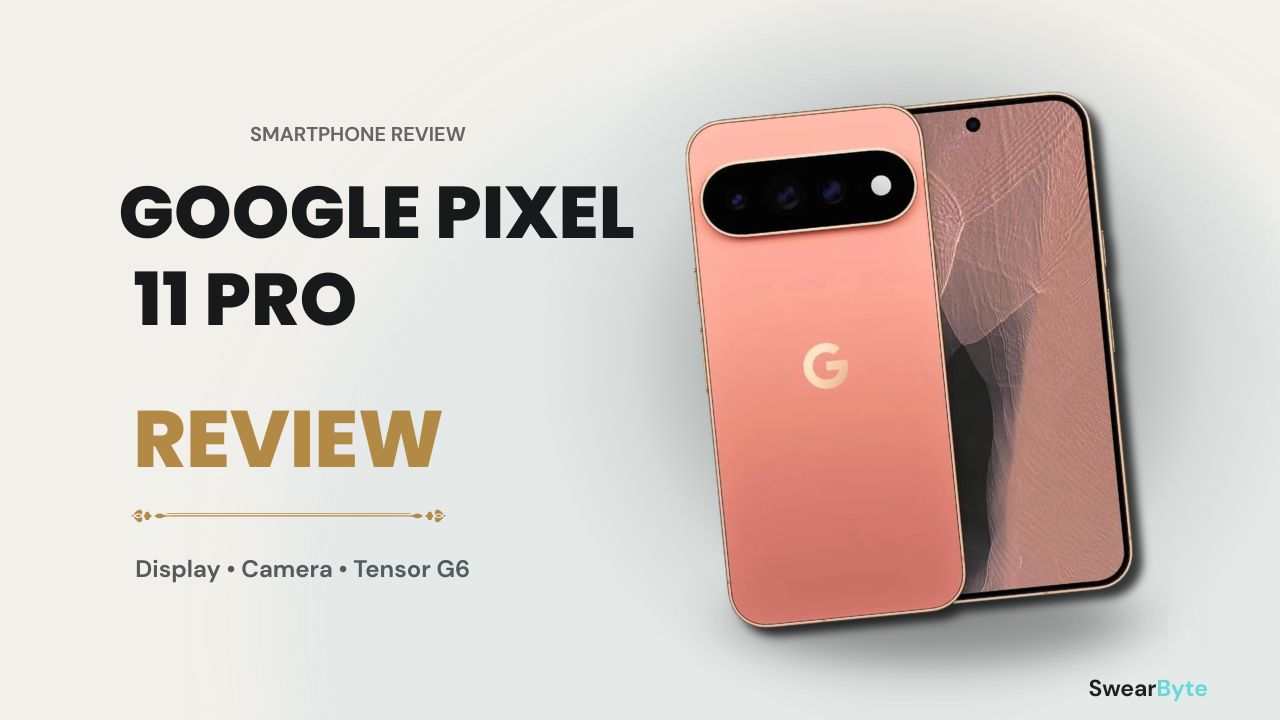
The Google Pixel 11 Pro combines a high-end design, a high-refresh-rate OLED screen, Google’s Tensor G6 chip, and a flexible camera system with three sensors. It looks to be a product targeted at users who value a good camera, software update durability, and an optimized Android interface.
What really got me is the combination of its small 6.3-inch screen with top-tier hardware. Google has even listed some useful features like Wi-Fi 7, 25W magnetic wireless charging, an ultrasonic fingerprint scanner, and satellite SOS messages.
In this article, I will review the specifications of the Google Pixel 11 Pro and explain how these features will benefit you in practice.
Google Pixel 11 Pro Specs at a Glance
| Feature | Specifications |
|---|---|
| Display | 6.30-inch LTPO OLED, 120Hz |
| Resolution | 1280 × 2856 pixels |
| Peak Brightness | 3600 nits |
| Processor | Google Tensor G6 (3 nm) |
| RAM | 12GB / 16GB |
| Storage | 256GB / 512GB / 1TB |
| Operating System | Android 17 |
| Main Camera | 50MP |
| Telephoto Camera | 48MP, 5x optical zoom |
| Ultrawide Camera | 48MP |
| Front Camera | 42MP |
| Battery | 4850 mAh |
| Wired Charging | 30W |
| Wireless Charging | 25W, magnetic |
| Water Resistance | IP68 |
| Connectivity | 5G, Wi-Fi 7, Bluetooth 6.0 |
Design and Build Quality
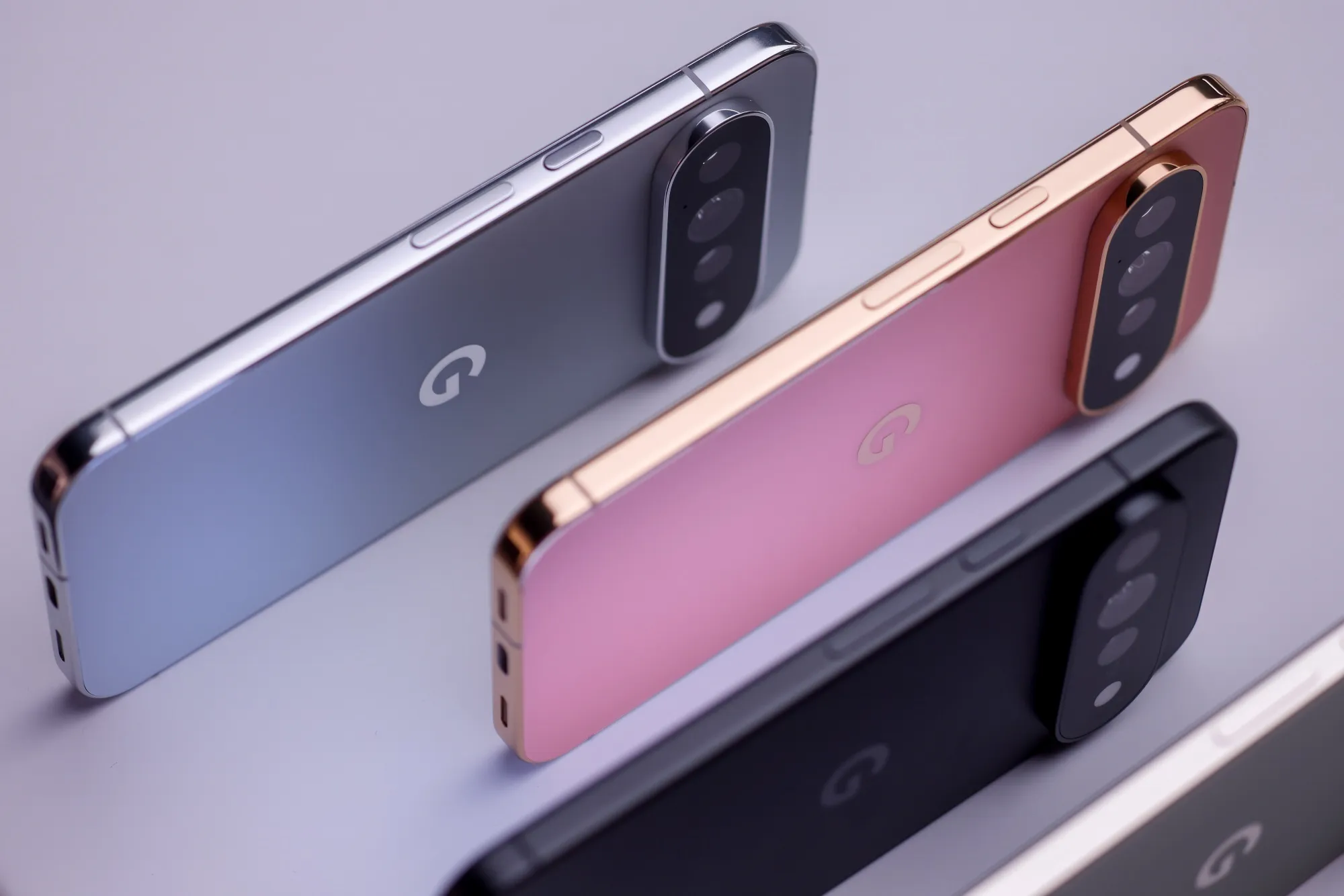
The dimensions of the Google Pixel 11 Pro are 152.7 × 71.9 × 8.4 mm, and its weight is 204 g. The build of the Google Pixel 11 Pro includes a glass back and an aluminum body, and therefore I would say that this smartphone is built using high-end materials.
The Gorilla Glass Victus 2 is used on both the front and rear sides, whereas the aluminum body gives additional strength to the phone. Gorilla Glass Victus 2 is developed by Corning, which provides additional information about the glass technology on its official website.
Also, the smartphone has an IP68 dust- and water-resistant rating, meaning that it can survive exposure to water at a depth of 1.5 meters for 30 minutes according to the standard test procedures.
In my opinion, the small size of the phone is definitely worth mentioning. The size of the 6.3″ screen ensures enough space to view content, yet it does not make the phone oversized.
6.3-Inch LTPO OLED Display
The Pixel 11 Pro is equipped with an LTPO OLED display of 6.30 inches with a 120Hz refresh rate.
The panel has the following characteristics: 1280 × 2856 pixels of resolution, a 20.08:9 aspect ratio, 497 ppi, and HDR10+ support.
120 Hz should provide smoother animation and scrolling compared to the usual 60 Hz. What is interesting about LTPO technology is the ability to dynamically adjust the refresh rate depending on what is being displayed.
It may help to balance smoothness and power consumption.
Brightness
It is important to note Google’s listed brightness values as well:
- 2,400 nits in HBM
- 3,600 nits of peak brightness
High peak brightness helps in case of outdoor viewing in bright conditions.
But it would be foolish to assume that the panel keeps 3,600 nits constantly. The maximum value is usually reached under certain conditions.
In general, it can be said that OLED technology, 120Hz, HDR10+, and high brightness are good specifications for the display.
Tensor G6 Performance
The Google Tensor G6 chip powers the Google Pixel 11 Pro and is made using the 3 nm process.
I expect the chip to handle most aspects of the user experience, such as performance, image processing, AI features, and battery life.
Nanometer isn’t the only thing I look at when judging a processor. There is more to be considered than just nanometers, such as the CPU and GPU architecture, clock speed, cooling systems, and Google’s optimizations.
From the listed hardware, I believe that the device will have a high-end user experience for most activities such as web browsing, messaging, taking pictures, watching movies, and multitasking.
Gaming performance is another matter, and I’ll reserve my judgment until I see some benchmark tests done separately.
RAM and Storage
Storage variants of the Google Pixel 11 Pro are the following:
- 256 GB + 12 GB RAM
- 512 GB + 16 GB RAM
- 1 TB + 16 GB RAM
The type of storage is UFS 4. x, which is used for quick transfer of data and loading of applications.
While the 256 GB variant will suffice for many consumers, 512 GB and 1 TB models seem more suitable for those who like to shoot high-resolution videos and store photo/media libraries.
The 16 GB of RAM versions are quite powerful too. They may come in handy when multitasking is involved, but it does not mean that more RAM guarantees more power.
In case of choosing one of the arrangements, I would consider my storage preferences rather than just purchasing the one with more memory.
Triple Rear Camera Setup
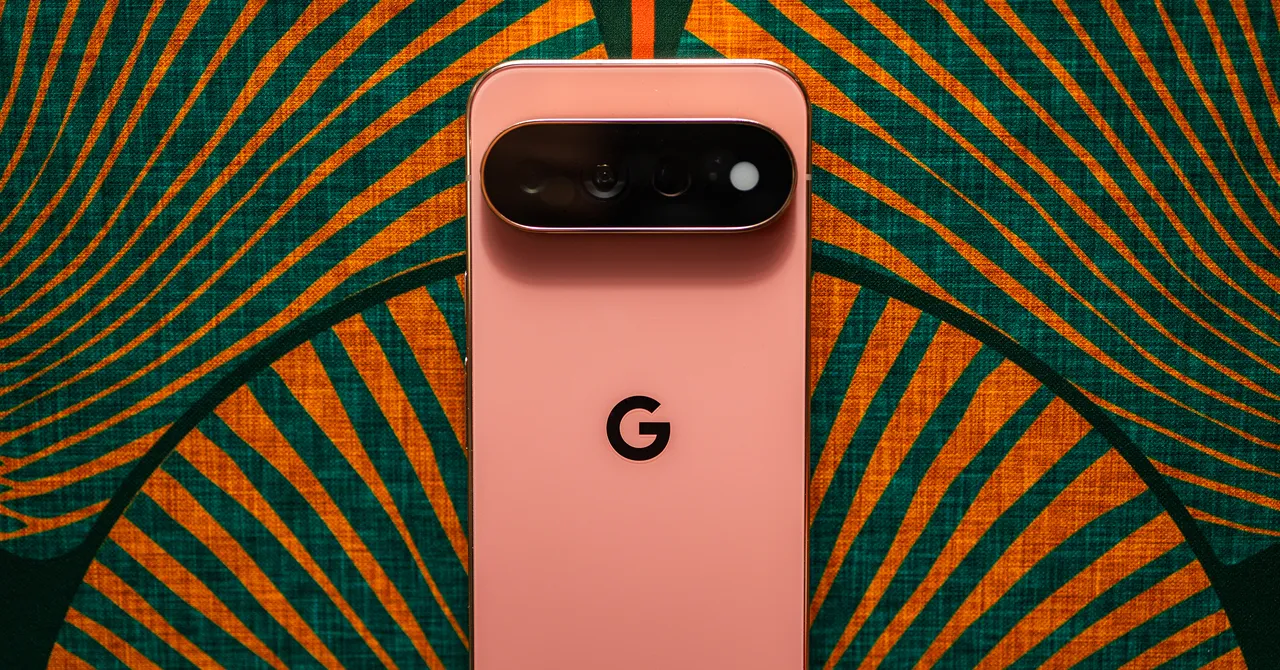
Another field in which the Pixel 11 Pro has some interesting specs is photography.
The rear camera system consists of:
- 50 MP wide main camera
- 48 MP telephoto camera
- 48 MP ultrawide camera
This means that the smartphone offers the user three angles of view instead of using a single sensor.
50 MP Main Camera
The main camera consists of a 50 MP sensor with an aperture of f/1.7 and a 25 mm equivalent focal length.
Also, the main camera offers multidirectional PDAF and optical image stabilization.
The sensor size according to the specs is 1/1.3 inch; the pixel size is 1.2 µm.
Optical image stabilization could help correct small hand shakes while photographing or shooting videos. The wide f/1.7 aperture could be useful when photographing scenes with not much light.
However, the megapixel count does not give the whole picture. The image processing software by Google has always been essential for photography by Pixel, so seeing the samples would be necessary for me.
48MP Telephoto Camera
The telephoto camera is equipped with a 48MP sensor having an equivalent focal length of 106mm and 5x optical zoom.
It also comes with Dual-Pixel PDAF and OIS.
One of the most useful features of these specifications is the 5x optical lens, which helps me capture images of far-off objects without depending entirely on digital zoom.
It may come in handy for travel photography, buildings, outdoor shots, and other hard-to-approach subjects.
48MP Ultrawide Camera
The third camera in the rear camera setup is a 48MP ultrawide sensor with a field of view of 123 degrees and an f/1.7 aperture.
A 48MP ultrawide lens would be useful if I want to capture more of a scene than is possible in one shot. Examples include landscapes, architecture, group shots, and indoor settings.
The ultrawide angle might sometimes distort the edges, which means the software processing by Google becomes important here as well.
42MP Front Camera
For selfies and video calls, the Pixel 11 Pro comes with a 42MP front-facing camera.
It comes equipped with an f/2.2 aperture, a 103° ultrawide field of view, and PDAF.
With the wider FOV, it might prove especially helpful for group selfies since it would let you capture many people in a single frame.
Another useful feature is autofocus, which allows you to use a changeable focus distance based on your subject.
If you’re also interested in comparing flagship smartphone cameras and specifications, you can check out my iPhone 18 Pro Max specs and features guide.
4850 mAh Battery and Charging
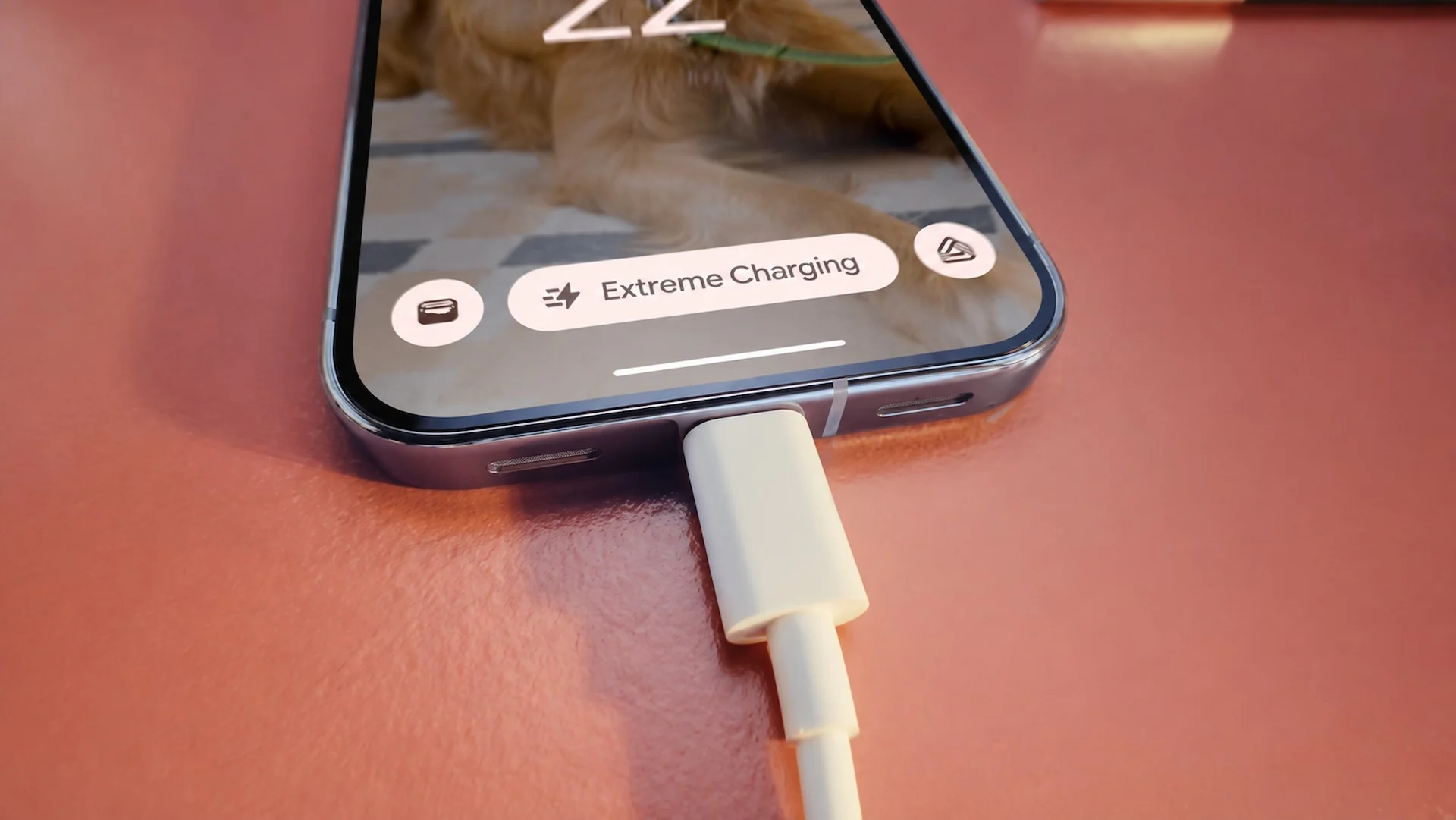
It is announced that the Google Pixel 11 Pro has a 4850 mAh battery.
Among the charging features are 30W wired charging and 25W magnetic wireless charging. Among other specifications, PD3.0, PPS, Qi2.2, reverse wired charging, and bypass charging were mentioned.
According to Google, there is a 55% charge within 30 minutes.
This information may be beneficial for people like me who depend on a quick top-up rather than waiting for a full charge.
Bypass charging may also come in handy. In some situations, where available, the phone is charged not via its battery but through the device itself.
However, it should be noted that battery capacity alone does not tell how long the phone is expected to last. The phone’s persistence depends on display brightness, mobile signal, games, camera usage, applications, and software optimization.
Android 17 and Seven Major Updates
The device comes with Android 17 and up to seven major OS updates.
For me, software longevity is just as essential as hardware since it can increase the useful life of smartphones.
Major software updates can add new capabilities, change the interface, and improve compatibility, among other things.
The actual update strategy and availability must be confirmed via official information from Google, especially since software update timings may differ by market and product policy.
Connectivity & Additional Features
Among the current connectivity technologies available in the Pixel 11 Pro are 5G, Wi-Fi 7, Bluetooth 6.0, aptX HD, NFC, and eSIM.
Wi-Fi 7 would enable faster and more advanced wireless networking, together with compatible hardware and network structure. For more information about the Wi-Fi 7 standard, you can refer to the official Wi-Fi Alliance resources.
The device also offers Ultra Wideband (UWB) that would enable proximity and location services if similar technologies are available.
For improved security and ease, there is an ultrasonic under-display fingerprint sensor.
Also, stereo speakers have been added to enhance the audio setup of the phone compared to the single speaker.
Finally, one of the new features worth mentioning is the SOS satellite messaging. However, this functionality depends on the availability of satellite services in the area, so it should be explained whether this service is available in the user’s country.
Frequently Asked Questions
Which processor is used in the Google Pixel 11 Pro?
The processor is stated as Tensor G6 by Google, which is fabricated on the 3 nm process.
What is the RAM of the Pixel 11 Pro?
12GB or 16GB of RAM is stated as its specifications.
Does the Pixel 11 Pro have a telephoto camera?
Yes, the Pixel 11 Pro has a 48MP telephoto camera with 5x optical zoom and OIS.
Is there any ability of the Google Pixel 11 Pro to record videos in 8K?
Yes, the stated rear camera system of the Pixel 11 Pro can record videos in 8K at 24 fps/30 fps.
What is the battery capacity of the Pixel 11 Pro?
It is stated as 4850 mAh; the charging power is 30W wired and 25W magnetic wireless.
Does the Pixel 11 Pro have Wi-Fi 7?
Yes, Wi-Fi 7 is stated among the connectivity features of the Pixel 11 Pro.
Final Thoughts
The Google Pixel 11 Pro comes with a specification sheet covering multiple aspects that can be considered important for a flagship phone today: photography, display, hardware, charging capabilities, connectivity, and longevity of software support.
However, none of the above specifications can be taken as a replacement for actual testing. In case any independent reviews become available, I would definitely focus on such aspects as the camera test results, performance, battery life, charging capabilities, and thermals.
If, at least on paper, the Google Pixel 11 Pro looks like an interesting phone for those who would like to have Google’s Android experience together with a decent camera system.
For the latest official information about Google’s Pixel phones, you can also visit the Google Pixel website.