Introduction
Becoming a freelancer, even with having no experience, might seem hard to do at first, but I think everyone is capable of becoming a freelancer by learning a useful skill. It’s not necessary for someone to be an expert from the very beginning. All that is required from a person is to select a skill and learn its basics through practice.
If you are interested in finding out how to start freelancing with no experience, then you will be glad to know 10 tips on how to start freelancing without experience.
Can You Start Freelancing With No Experience?
1. Choose one skill
Pick one skill that is easy to learn, like content writing, graphic design, video editing, WordPress, SEO, virtual assistance, or social media management.
2. Learn the basics
Spend a couple of weeks learning by watching free tutorials and online courses and doing projects. Do not try to learn everything at once.
3. Create sample work
If you do not have clients, make your samples on your own. For instance, for a beginner content writer, it will be enough to write 3-5 articles; for a graphic designer, make samples of logos and social media posts.
4. Build a portfolio
Place your best samples on any platform where future clients will easily find them. You do not need an expensive website at the beginning of your career.
5. Start with small projects
Search for beginner-level projects rather than expensive ones right away. It is more important to get some experience, reviews, and confidence.
6. Improve after every project
Improve your skills and increase prices step by step based on clients’ feedback.
What is really important is not to wait until you feel you have enough experience. Begin learning, build proof of your skills, and allow your early projects to give you the experience you lack.
10 Ways of How To Start Freelancing With No Experience
1. Select One Freelancing Skill
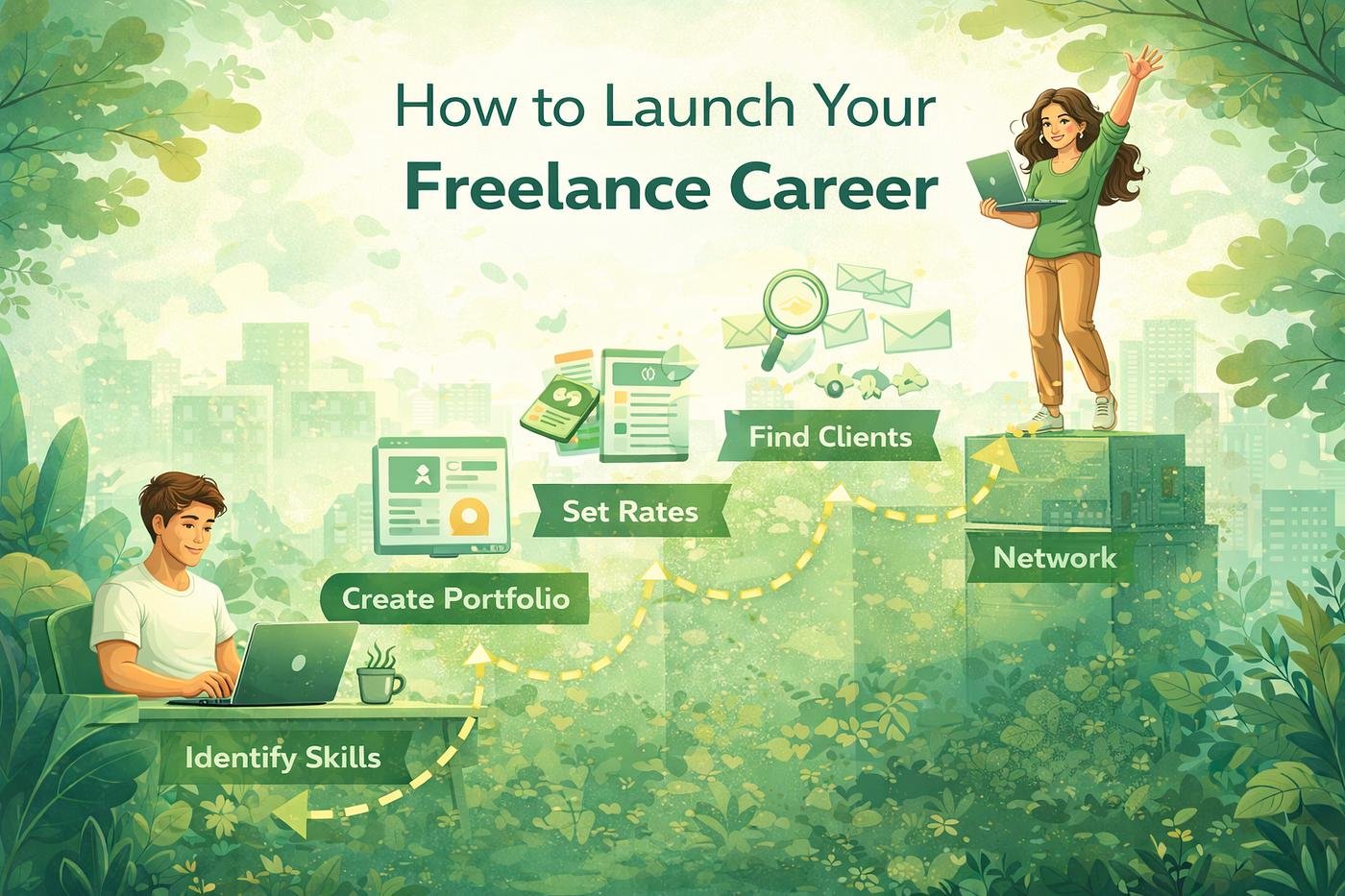
To learn how to start freelancing without any experience, one should begin by selecting a skill that will be learned and then offered to customers in the future. There is no need to learn all skills or even several of them; focusing on only one will make the process simpler.
Possible skills for beginners to consider are the following:
- Content writing: creation of blog posts, content for the website or product, and other kinds of online content.
- Graphic design: creation of social media posts, banners, thumbnails, presentations, and simple designs for brands.
- Video editing: editing short videos, YouTube videos, reels, and other types of social media content.
- WordPress: creation and management of websites and making basic changes there.
- SEO: improving websites’ performance in search engines by means of keyword research, on-page optimization, and content optimization.
- Social media management: posting, captioning, creating post schedules, and other kinds of basic social media management.
- Virtual assistance: helping clients with research, email management, and other kinds of administrative work.
- Data entry: entering, organizing, and managing data in spreadsheets and other kinds of documents.
Select an expertise that suits your interest and ability, but take into account whether companies are willing to pay for such a service. Once done, instead of moving from one task to another frequently, focus on acquiring knowledge and skills in that particular area only. You can expand later.
2. Learn the Basics for Free
After selecting a freelancing skill, begin your journey by mastering the basics. In no way should you pay for pricey courses at the very beginning. There are thousands of tutorials available on YouTube, and free courses and certifications can be found at HubSpot Academy.
The key is that you have to pick one learning route and apply your knowledge rather than just watch the videos and not implement the information.
For instance, if you are learning content writing, then focus on such basics as article structure, research, headlines, readability, and basic SEO. At HubSpot Academy, there is a free Blogging Course, which is about content creation, blogging strategy, and SEO, and there is also an advanced Content Marketing Course.
You can find many helpful YouTube tutorials as well. Some useful search queries are:
- Content Writing: Content Writing for Beginners – YouTube
- SEO: SEO for Beginners – YouTube
- Graphic Design: Graphic Design for Beginners – YouTube
- Video Editing: Video Editing for Beginners – YouTube
- WordPress: WordPress for Beginners – YouTube
- Virtual Assistance: Virtual Assistant Training for Beginners – YouTube
It is not necessary for you to finish each and every course or watch numerous tutorials. Choose those resources that are relevant to the particular skill you have picked and then learn its basics and practice them right away. For instance, once you have learned the art of writing a blog post, go ahead and write one rather than proceeding to the next tutorial.
3. Practice With Realistic Projects
Developing a freelancing skill is just the first part of the process. If you plan on freelancing without any prior experience, then you should start practicing your skills through projects that are similar to the actual work of freelancers.
You do not need to have a client to practice your new skill; you can develop your skills by coming up with your own realistic projects. For instance, if you are practicing content writing, then come up with a topic and write a whole blog post. In the case of graphic design, you can create posts for social media, a business flyer, or some simple brand design. In video editing, you can edit videos using existing footage.
Make sure to pick out a project that can help you solve a certain problem instead of randomly practicing your skill.
While working on realistic projects, be aware of quality, precision, time limits, and the way your work is presented, since these are the criteria a client will evaluate you by when choosing to hire you as a freelance beginner.
You do not have to do hundreds of projects. Begin with three to five good samples that showcase your skills. This way, you will have a portfolio to show your potential clients even if you have never worked with any paying client.
4. Make a Simple Portfolio
The portfolio is among the key items that you should make while trying to learn how to start freelancing with no experience. It will give clients a chance to understand what exactly you are capable of doing, even though you haven’t worked on paid projects.
It does not have to be an advanced website or portfolio; all that you should do is gather 3-5 of the best projects that you have created during your practice and put them together in one place. According to your skills, it may include blog posts, graphic design, video editing, websites, SEO projects, etc.
Provide a brief description of what you did for each sample:
- What you made
- Why you made it
- Which skill(s) or tools you used
- Your role in the process
Make sure that your portfolio is concentrated only on the kind of freelance services you want to provide. So if you are going to write content, five good articles will be much better than various design works.
The most important thing here is not to pretend that you completed practice projects for paid clients. You can always state that it is just your personal work or sample portfolio. An effective portfolio will be enough to get you started even if you are just a beginner in freelancing.
5. Build a Freelance Profile
Having created some samples, you should build a profile of yourself on those websites that have people in search of your skills. You may find such sites as Upwork, Fiverr, Freelancer, and others.
If you are trying to start freelancing and have no previous experience, you do not have to write about the number of years of experience that you have. It is better to specify what you can offer and what work you will do.
A good freelance profile should consist of:
- A profile picture that seems professional and friendly.
- An exact title describing the kind of service you give to your clients.
- Description of your skills and how they help your clients.
- Skills and tools you know how to use effectively.
- Portfolio samples that show your best work.
- Reasonable starting price depending on your current level of skills and kind of service you provide.
Do not write an amateurish profile like “I can do anything.” Your clients will better understand your worth if your profile describes only one service. For example, instead of “I am a freelancer who can do everything,” you may say, “Beginner SEO Content Writer with special skills in writing blog posts and website content.”
The first freelance profile cannot be perfect. With practice, feedback, and new skills gained while working on projects, you can improve your profile.
6. Start with Small Tasks
When beginning to learn about freelancing without any experience, the first objective should not be to get the big and most profitable projects. Begin with simple tasks according to your experience level so that you get to learn the ropes.
Simple freelance tasks are relatively easy to do, and they will help you learn more about how clients interact, what they demand, and how to revise and review their work. For instance, a beginner content writer can begin with a small blog post, while a graphic designer can undertake simple social media designs.
When searching for your first freelance job, look for one that:
- Matches your skill set.
- Has well-defined parameters and realistic deadlines.
- Is manageable enough so that you feel confident in being able to do it.
- Allows you to show what you can do.
Do not bid on everything just because you want your first client. Look at the requirements and apply only if you are able to match them with your skill set.
Experience is the most important thing when you are starting out. It will build your portfolio and give you clients and confidence.
For example, let’s consider a case where you’re an aspiring content writer. Rather than bidding for big jobs that would need to be completed by 20 articles per month, try to find a client looking for one blog post that should range between 800 and 1,000 words long. Do your part and write the piece in compliance with the instructions from the client. If satisfied, you might even get a positive review or some more work.
7. Find Your First Clients
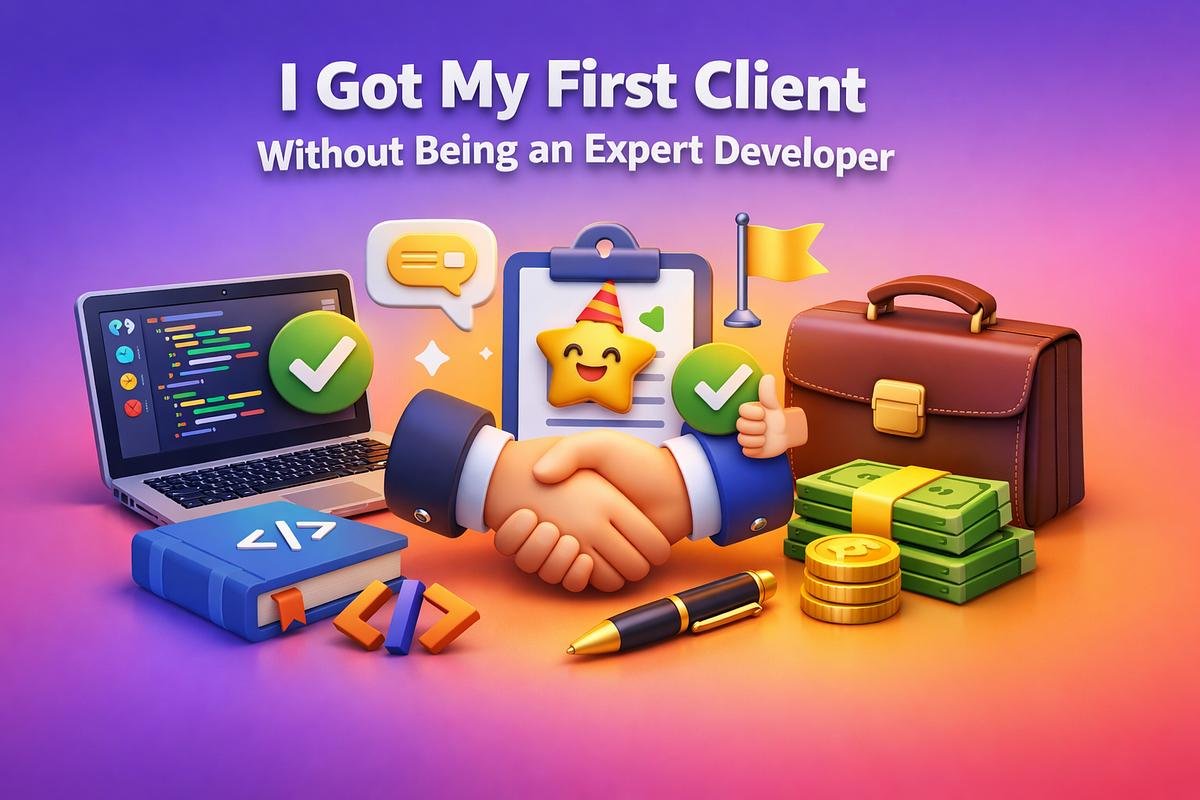
After acquiring some skills, practice jobs, and an easy portfolio, it is time to find your first customers. This step might be one of the most difficult in figuring out how to become a freelancer with zero experience, since you won’t have any reviews or references proving your competence.
Look for small but relevant gigs at freelance websites like Upwork, Fiverr, and Freelancer. You can also try finding customers on LinkedIn, Facebook groups, online forums, or among small businesses that could use your services.
In your search for customers, avoid sending a generic message to everybody. Analyze the project needs and describe briefly how your skills can be useful for this particular job. Also, attach a relevant sample from your portfolio.
For example, if you offer content writing and find a small business looking for blog content, you could send a short personalized proposal explaining that you can write a well-researched article based on their topic and share a relevant writing sample.
Don’t be discouraged if you don’t get a response immediately. Your first client may take several applications or conversations. Focus on relevant opportunities, personalized proposals, and consistent effort rather than applying to every job you find.
Once you complete your first project successfully, ask the client for honest feedback or a review. That first piece of client experience can make it easier to win your next freelance project.
8. Write Better Freelance Proposals
In a good freelance proposal, one should be able to make the client realize that he or she understands the client’s needs and is capable of solving the problem. One should not send the same proposal to all his or her clients.
The freelance proposal should be kept brief, and it should include:
- Client’s requirements
- How you can help
- Portfolio samples that are related to the requirement
- One simple question in case of clarification
Practical example: When your client requires a blog post on fitness that should be 1,000 words long, avoid saying, “I will write the article for you.” Rather, say, “Hi, I will write a researched article of 1,000 words on fitness that has clear headings, appropriate keywords, and a great intro. Attached is a sample of my writing.”
Instead of writing something like “I am an experienced freelancer and can do this job,” one should explain what he or she is going to do and how his or her skills match the requirements.
9. Use AI Tools to Become More Productive

AI tools can help beginners work faster, research ideas, organize tasks, and improve their productivity. If you want to explore more practical ways to use AI, check out our guide to AI tools for daily life.
But don’t use AI as an excuse not to put in any effort yourself. Always re-edit and fact-check the work generated by an AI tool. You must remember that you must always be the most important element of the job.
Example of application: A freelance writer can use ChatGPT to come up with ideas and make an outline and then conduct proper research and write an article themselves.
A responsible approach to the usage of AI will allow you to save time but not compromise the quality expected by your clients.
10. Building Positive Reviews and Improving Your Skills
Once you’ve completed your initial projects as a freelancer, concentrate on building positive reviews and enhancing your skills. Positive reviews will enhance your credibility and make it easier for you to acquire new clients.
Having provided good work to your clients, kindly request a review of your work. At the same time, learn from their comments and find out where you can improve.
Never stop learning after your first client. Continue practicing, learn new ways, and gradually start undertaking tougher projects. In due course, your improved skills and reviews will help you **build a successful freelance career** and earn more money.
Common Mistakes That New Freelancers Must Avoid
There are certain things that a new freelancer is very likely to do wrong, which may hold them back from advancing further. These are some of the common ones:
Applying to all jobs: Select projects that suit your skill set.
Overpromising: Promise only what you are able to deliver.
Not following instructions: Carefully read the description before applying to any job.
Undervaluing: Do not underprice yourself.
Delaying projects: Do not miss your deadline; otherwise, keep your client informed.
Copying: Only submit your own original content for your portfolio.
Rapid success: Give yourself sufficient time to develop yourself.
FAQs: Frequently Asked Questions
Can I freelance without having any experience at all?
Yes. Get a single skill and then start applying for small projects.
Which skill should I choose to freelance if I am a beginner?
Content writing, virtual assistance, data entry, and basic graphic design can be good choices, as they require fewer skills.
How do I get my first freelancer client?
Just build a solid portfolio and apply for small projects using personalized messages rather than generic ones.
Do I need a degree to become a freelancer?
No. Freelance clients generally value your skills and portfolio more than your degree.
How much time would it take to start freelancing?
It totally depends on your skill level and effort. If you think that you are ready enough, then you can apply for small projects.
Conclusion
Personally, you don’t need to have many years of experience in order to start working as a freelancer. As far as the question “How do I become a freelancer without experience?” goes, it’s better to get skilled in one particular thing, practice a lot, and make samples for your portfolio.
From my personal experience, beginners usually focus on finding clients rather than improving their skills. It is good to start by doing some simple things, receiving feedback, and offering personalized proposals. The first client might not come easily or quickly, but you have to be consistent and patient.
Also, it is possible to use such AI services as ChatGPT, Grammarly, and Canva for researching, writing, editing, and organizing tasks.
In case you want to use different AI tools, we also provide a ChatGPT Plus vs. Claude Pro comparison. On our website.
The key thing here is to start learning and practicing regularly. You don’t have to be perfect from the very beginning.
One Comment on “How to Start Freelancing With No Experience: 10 Practical Ways”